When Facebook first announced it was stepping into the dating world, most people shrugged. Facebook — the place full of family photos, college friends you don’t talk to anymore, and your aunt’s conspiracy memes — did not feel like the natural home for romance. Tinder had the youth. Bumble had the branding. Hinge had “serious intentions.” Facebook? Facebook had … everyone’s mom.
So when Meta recently revealed that Facebook Dating quietly amassed over 21 million users, the collective reaction was basically: Wait. Who? HOW?
But here’s the twist: not only are millions of people using it, a surprising chunk of those users are young. Like, “Gen Z on a platform they claim to hate” young. Somehow, in an era where dating apps feel more exhausting than exciting, Facebook Dating is emerging as a strange little underdog — a place where people are genuinely meeting, flirting, reviewing potential dates for fun, and even running side hustles.
And the more you explore it, the clearer it becomes: Facebook Dating’s rise isn’t accidental. It’s weird, chaotic, and occasionally kind of brilliant.
Let’s dive deep into how this “non-app app” became one of the most fascinating corners of the modern dating ecosystem.
A Dating App Hidden Inside an App Everyone Claims They Don’t Use
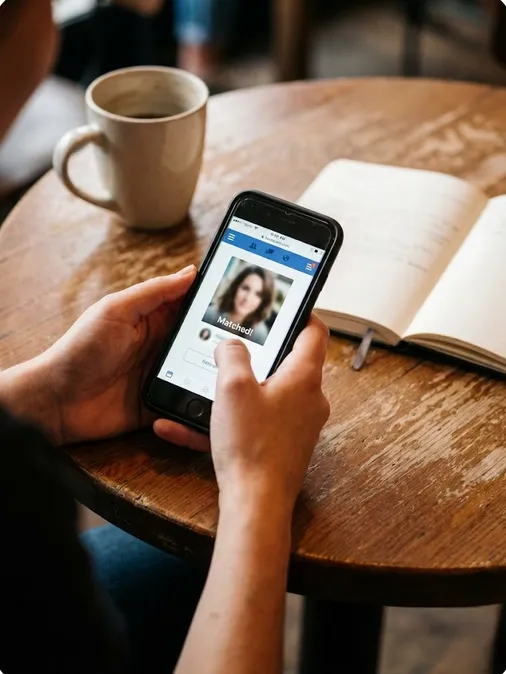
Unlike Hinge, Bumble, or Tinder, Facebook Dating isn’t its own standalone platform. It sits quietly inside the regular Facebook app — right next to Marketplace and Groups. You don’t download anything. You don’t pay for anything. You don’t even need to tell your Facebook friends you’re using it; your dating profile stays totally separate.
This friction-free entry point is one of the reasons it has ballooned to tens of millions of users. You open Facebook, see a little heart icon, and boom — you’re inside a dating universe you didn’t know existed.
Many users discover it by accident. Someone is scrolling Marketplace, hunting for a cheap bookshelf, and suddenly they're greeted with a message like: “Meet singles in your area!”
It’s the kind of feature you check out half ironically … and then suddenly you’ve been swiping for 45 minutes.
Why Gen Z Is Secretly There (Even If They Pretend They Aren’t)
The biggest surprise in Meta’s user data wasn’t the total number of people on Facebook Dating. It was the age breakdown: nearly 2 million daily active users in the U.S. are between 18 and 29.
How is that happening in a generation that openly declares Facebook “dead”?
A few reasons:
1. No subscription nonsense
Most dating apps now lock useful features behind paywalls. Want to see who liked you? Pay. Want advanced filters? Pay. Want more than a handful of “super likes”? Pay.
Facebook Dating doesn’t do this. Everything is available to everyone. You can filter by height, interests, location, kids/no kids, and more without swiping a credit card.
2. The algorithm feels weirdly accurate
Several users say they started off with hilariously mismatched profiles — someone living 900 miles away, or people well outside their target age — but over time, the system “learns” what they actually like.
3. The vibe is different
There’s less of the performative “dating-app culture” energy. It’s messier, more earnest, and somehow more honest. People write things like:
- “Not here for drama.”
- “This isn’t Tinder, let’s act right.”
- “Please be nice.”
Whether charming or cringe, the tone feels refreshingly human.
4. Content creation
This one shocked even me: Gen Z is using Facebook Dating for clout.
On TikTok, creators review their matches, react to chaotic profiles, share their “Hinge vs Facebook Dating” experiments, and even narrate horror stories. The entertainment value alone keeps people coming back.
And then there are the “e-girls and e-boys” using it to promote streaming channels, music, and Instagram pages.
One musician admitted flat-out:
“I use it to promote my songs more than to find dates. And so does everybody else.”
It’s marketing, but spicy.
Facebook Dating’s AI Assistant: Surprisingly Smart, Surprisingly Fast
Every dating app rushed to add AI features this year, but Facebook’s implementation quietly became one of the most functional versions on the market.
The assistant can:
- suggest people who match your interests
- summarize profiles
- draft opening messages
- help you refine your preferences
- recommend people your mom might approve of (yes, that’s a thing)
- help you “skip the swipe” and go straight to curated matches
It’s fast — genuinely ChatGPT-level fast — and surprisingly insightful.
For example, you can type:
“Find me someone who likes music festivals and would try random new restaurants with me.”
And it will produce a list of potential matches who fit that description.
This feature alone has pulled in curious new users who want to see how far automation can push modern romance.
Vibe Check: The Weekly Quiz That Wants to Match You With Your Soulmate
Another new feature, “Vibe Check,” functions like an alignment test. Each week, users answer playful, sometimes flirty questions. The system then groups you with people who answered the same way.
The idea is to spark more natural connections — less about swiping on looks, more about matching on humor, energy, or moral values.
It’s a refreshing counterbalance to hyper-visual dating culture.
Meet Cute: Facebook’s Answer to Hinge’s Standouts (But Without the Paywall)
“Meet Cute” is a curated daily recommendation — a specially-selected person who fits your personality and interests. It’s a direct competitor to Hinge’s “Standouts” feature, except you don’t need to buy roses or tokens to interact with them.
This is one of the biggest appeals for younger users tired of microtransactions.
A “special match” that you don’t have to pay for? Unheard of.
The Dark Side: Scammers, Catfishers, and Long-Distance Weirdness
With millions of users comes millions of problems.
1. Distance glitches
A recurring complaint is that matches often show up from hundreds or thousands of miles away. Facebook says the algorithm improves over time, but still — people in California are tired of matching with people in Ohio.
2. Scams
Some users recount long, dramatic stories of being fooled by fake profiles — including a now-viral TikTok series where someone was scammed out of $4,000.
Facebook has been removing massive volumes of profiles associated with impersonation rings. In 2024, more than 400,000 accounts across several countries were deleted for fraud attempts.
3. Catfish central
Some zones of Facebook Dating have been jokingly called “the Metaverse of Catfish” due to the number of dubious profiles.
Despite these issues, many users say the platform still feels safer than expected because it’s tied to Facebook verification mechanisms.
The Biggest Mystery: Why Isn’t Facebook Dating a Cultural Phenomenon?
With 21 million users — more than Hinge — why does Facebook Dating still feel invisible?
Several reasons explain this:
1. Zero marketing
Facebook Dating has not run a major ad campaign. Ever.
Meta relies on the main app’s ecosystem to draw people in.
2. Stigma
Let’s be honest: telling someone you met on Facebook Dating sounds like revealing you met in the comments section of a neighborhood watch page.
3. Overshadowed by the “Facebook is for old people” narrative
Even if it’s not true anymore, the perception sticks.
4. The dating-app market is painfully saturated
If Meta launched Facebook Dating as a separate app, it might get lost among the hundreds of swiping apps already out there.
But this low-key approach might actually be its advantage. It’s an ecosystem within an ecosystem — no downloads, no fuss, no subscription traps.
Real People Are Actually Finding Relationships There
Despite the memes and skepticism, users report making real connections.
One bartender said it’s the only dating app where profiles consistently reflect people looking for genuine relationships, not just hookups or attention.
Another user met his boyfriend through Facebook Dating after a simple message exchange. It didn’t take complicated features or paid tokens — just two people talking.
It’s almost old-school, in a way.
Clout Chasing, Chaos, and the Unintentional Soul of Facebook Dating
What makes Facebook Dating unexpectedly compelling is how people use it beyond “finding love”:
- Some use it for promoting music, livestreams, or OnlyFans
- Some use it to critique profiles on TikTok
- Some use it to practice flirting or messaging
- Some use it as a way to gather content for storytimes
- Some use it ironically, then get hooked
- Some use it to escape the polished perfection of Instagram and Hinge
Its biggest cultural footprint isn’t romance — it’s entertainment.
That’s what makes it uniquely Gen Z, even though it’s inside an app built by millennials and adopted heavily by boomers.
Why Facebook Dating Might Actually Become Meta’s Next Big Bet
Meta confirmed it’s launching its first-ever marketing campaign — in 2026 — starting in Texas. That means the company believes this platform has potential far beyond its current reach.
And honestly? They might be right.
Dating apps today feel repetitive. Swipe left, swipe right. Pay for the good features. Try not to burn out. Repeat next month.
People are desperate for something that feels different — or at least doesn’t feel like work.
Facebook Dating:
- doesn’t push subscriptions
- has AI tools that feel genuinely useful
- has massive built-in audience
- lets people treat dating as entertainment if they want
- doesn’t pretend to be cool
It might not be trendy, but it’s functional. And sometimes, functional wins.
The Big Question: Where Does It Go From Here?
With tens of millions of users already onboard, Facebook Dating has a rare chance to reinvent online dating — not through sleek branding, but through scale and experimentation.
Its future depends on whether Meta:
- solves the distance-match glitch
- continues improving safety and removing impersonators
- markets Facebook Dating as something besides “another dating app”
- uses AI responsibly to enhance connections
- can position it as a fresh alternative instead of a boomer service
If it succeeds, Facebook Dating could reshape the industry — not by being flashy, but by making dating a little easier, a little less expensive, and a little more fun.
Final Thoughts: The Most Unexpected Dating App of the Decade
Nobody expected Facebook Dating to be relevant in 2025. Yet here it is — a secret giant, a Gen Z playground, a chaos engine, a clout hub, and a surprisingly decent matchmaking tool.
Maybe that’s the charm.
It doesn’t pretend to be perfect. It doesn’t pretend to be elite. It doesn’t pretend to be exclusive. It’s just … there. In your phone. In your app. Waiting for you to tap a little heart icon.
It might not replace Tinder or Hinge for everyone. But it’s carving out a weird, lively niche — and proving that romance (or entertainment, or self-promotion) can strike in the most unexpected digital spaces.
Facebook Dating isn’t cool.
But it might just be the most interesting dating platform we’ve got right now.