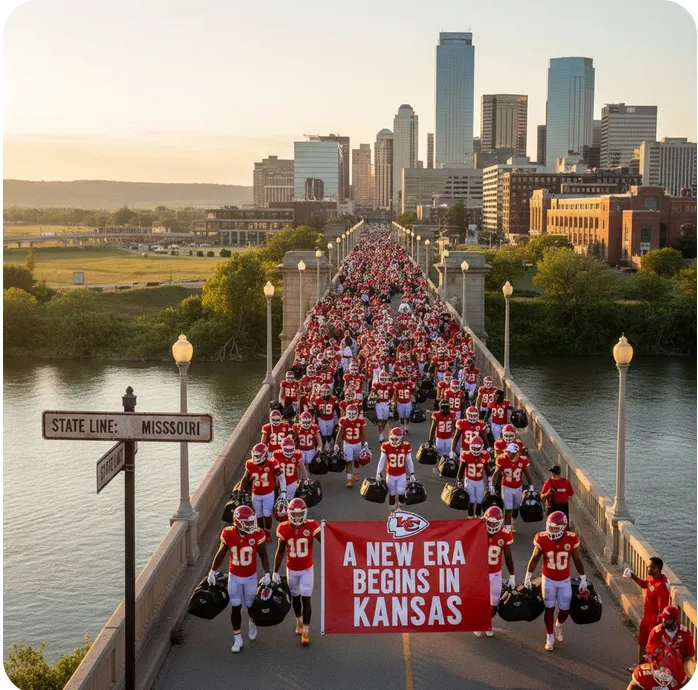
In a move that has sent shockwaves through the heartland of American football, the Kansas City Chiefs have officially announced plans to relocate from their historic home in Missouri to a brand-new, state-of-the-art domed stadium in Kansas starting with the 2031 NFL season. This decision marks the end of an era at Arrowhead Stadium, one of the most iconic and deafening venues in professional sports, and the beginning of an ambitious chapter across the state border. While the team's name and passionate fanbase—known as Chiefs Kingdom—remain unchanged, the physical home of this dynasty-in-the-making will shift westward, highlighting the intense competition between neighboring states to host major sports franchises.
The announcement came on December 22, 2025, following unanimous approval by Kansas lawmakers of a massive public financing package. Kansas Governor Laura Kelly, beaming in Chiefs red, celebrated the deal as a game-changer for her state. She emphasized that Kansas is no longer just a "flyover" territory but a destination ready for the national spotlight. The project includes not only a cutting-edge domed stadium in Wyandotte County—likely near the vibrant Legends Outlets area, close to existing attractions like the Kansas Speedway and Children's Mercy Park—but also a top-tier training complex and headquarters in nearby Olathe, Johnson County. Together, these developments are projected to exceed $4 billion in total investment, promising thousands of jobs during construction and billions in long-term economic impact.
For Chiefs Chairman and CEO Clark Hunt, whose family has steered the franchise since its founding, this relocation echoes the visionary risks taken by his father, Lamar Hunt. Lamar founded the American Football League in the 1960s, relocated the team from Dallas to Kansas City in 1963 (renaming them the Chiefs), and helped build the NFL into the behemoth it is today. Clark Hunt described the move as a continuation of that innovative spirit, focused on delivering the ultimate fan experience. "We're big dreamers off the field as well," he noted, pointing to the domed design that could position the new venue to host Super Bowls, Final Fours, and other mega-events—opportunities limited at the open-air Arrowhead.
The Backstory: How We Got Here
To understand this seismic shift, we have to rewind to the ongoing saga of stadium funding in the Kansas City metropolitan area. The Chiefs and their neighbors, the Kansas City Royals baseball team, share the Truman Sports Complex in Missouri, where their leases expire at the end of January 2031. Both teams have been eyeing upgrades or new builds for years, as modern NFL and MLB facilities demand luxury suites, advanced technology, year-round usability, and integrated entertainment districts to maximize revenue.
In April 2024, Jackson County, Missouri, voters rejected a proposed sales tax extension that would have funded renovations to Arrowhead and a new ballpark for the Royals. This setback opened the door for cross-border courtship. Kansas lawmakers quickly passed legislation expanding their STAR (Sales Tax and Revenue) bonds program, allowing up to 70% public financing for major projects like stadiums. Missouri responded with its own incentives, capping state contributions at around 50%, but negotiations involved multiple parties: the state, Jackson County, and Kansas City officials.
Ultimately, Kansas's streamlined offer—dealing primarily with one entity, the state—proved decisive. The package includes bonds repaid through sales taxes generated in the stadium district, plus revenue from sports betting. Estimates suggest public funds could cover 60-70% of the $3 billion stadium cost alone. Chiefs officials praised the partnership, insisting the move benefits the entire bi-state region while securing the franchise's future competitiveness.
Life at Arrowhead: Saying Goodbye to a Legend
Arrowhead Stadium, opened in 1972, isn't just a building—it's a cathedral of noise and tradition. Renowned as the loudest stadium in the NFL (with a recorded peak of over 142 decibels), it has hosted generations of tailgates, heartbreaking losses, and triumphant victories. The sea of red on game days, the barbecue smoke rising from parking lots, and the roar that rattles opponents— these are the intangibles that have made the Chiefs a home-field terror.
The team's recent dominance has only amplified Arrowhead's lore. Led by quarterback Patrick Mahomes and tight end Travis Kelce, the Chiefs have reached five of the last six Super Bowls, claiming three titles and four overall in franchise history. This success, boosted by global attention from Kelce's high-profile relationship with music icon Taylor Swift, has turned Chiefs games into cultural events. Swifties in No. 87 jerseys became a common sight, expanding the fanbase far beyond the Midwest.
Yet, at 53 years old, Arrowhead is showing its age. It's the third-oldest stadium in the league, behind only Soldier Field and Lambeau Field. Renovations could modernize it, but a new domed facility offers more: protection from Midwest weather, expanded event hosting, and revenue streams from concerts, conventions, and non-football spectacles. Hunt assured fans that core traditions—like epic tailgating and ear-splitting crowds—will carry over, even if the GPS coordinates change.
Reactions: Celebration in Kansas, Heartache in Missouri
Kansas wasted no time spiking the football. Governor Kelly and local leaders hailed the deal as a booster for tourism, jobs, and state pride. With anchors like the NASCAR track and soccer stadium already in the area, the new Chiefs complex could transform Wyandotte County into a premier sports and entertainment hub.
On the Missouri side, responses ranged from gracious to pointed. Kansas City Mayor Quinton Lucas accepted the outcome as a savvy business choice, noting Kansas's superior financing package outbid Missouri's "fair and responsible" offer. He expressed disappointment but professionalism, understanding teams must prioritize long-term viability.
Missouri Governor Mike Kehoe took a sharper tone, calling the decision disturbing for disregarding the Hunt family's legacy tied to the Show Me State. He emphasized that Arrowhead represents more than bricks and mortar—it's the foundation Lamar Hunt built. Some fans echoed this sentiment, worried about diluting "Chiefs Kingdom" identity across state lines.
This isn't Missouri's first rodeo with losing teams. The state has seen the NFL's Cardinals flee St. Louis for Arizona in 1988 and the Rams depart for Los Angeles in 2016 (after a brief St. Louis stint). Now, attention turns to the Royals, who are exploring new stadium options and could follow suit if Missouri can't muster a competitive bid.
Precedents: Teams Crossing Lines Without Changing Names
Intra-market moves aren't unprecedented in pro sports. The New York Giants and Jets both play in New Jersey but retain their "New York" branding. The Washington Commanders have called Maryland home since 1997, far from D.C. proper. The Chiefs' shift—about 20-25 miles west—keeps them in the same media market, meaning no blackout worries or fanbase splintering on a massive scale. Most supporters will face similar commutes, and the "Kansas City" moniker stays intact, reflecting the metro area's shared identity.
What This Means for Fans and the Future
For die-hard Chiefs fans, emotions are mixed. Many mourn leaving Arrowhead's hallowed ground, where memories from playoff thrillers to Super Bowl parades were forged. Others excite at the prospect of a futuristic dome: climate-controlled comfort, better amenities, and the chance to host a Super Bowl in their backyard.
Economically, Kansas stands to gain big. Projections include over 20,000 construction jobs, $4.4 billion in building-phase impact, and ongoing boosts from tourism and events. Critics of public stadium funding will debate whether taxpayer dollars are best spent luring teams, but proponents argue the intangible prestige and ripple effects justify it.
As 2031 approaches, expect renderings, groundbreaking ceremonies, and perhaps even naming rights drama. The Chiefs remain committed to contending now—defending their titles at Arrowhead through 2030—while building toward tomorrow.
In the end, this move underscores a timeless truth in sports: franchises evolve to thrive. Lamar Hunt dared to dream big by bringing pro football to the Midwest. His son is doing the same, ensuring the Chiefs chase not just Lombardi Trophies, but a sustainable legacy. Chiefs Kingdom may cross a state line, but the passion, the red, and the pursuit of greatness? Those are borderless.