In the fast-moving worlds of artificial intelligence and space exploration, few figures are as influential as Sam Altman, the CEO of OpenAI. Known for steering OpenAI through a period of explosive growth and innovation, Altman has now reportedly explored an entirely new frontier: entering the rocket and space infrastructure business. This would put him in potential competition with one of the most high-profile space companies in the world: Elon Musk’s SpaceX.
While the details remain preliminary, this development signals an exciting convergence of two of the most futuristic industries—AI and space. It also highlights Altman’s broader ambitions, which extend far beyond building smarter chatbots and into reshaping the infrastructure that could power the future of computing and exploration.
Altman’s Interest in Space: From AI to Rockets
Sam Altman has long been a visionary entrepreneur and investor, with a knack for spotting opportunities before they fully materialize. Over the past few years, his focus has largely been on artificial intelligence, leading OpenAI to create products like ChatGPT, which have become cultural phenomena. But as AI technology scales, the demand for massive computing resources grows exponentially.
This is where Altman’s interest in space comes into play. He has publicly discussed the potential for orbital data centers, facilities in space designed to handle the enormous energy and cooling requirements of AI computation. The idea is simple yet ambitious: by placing servers in orbit, companies could take advantage of solar power and near-zero latency in energy costs, creating a new paradigm for sustainable, large-scale computing.
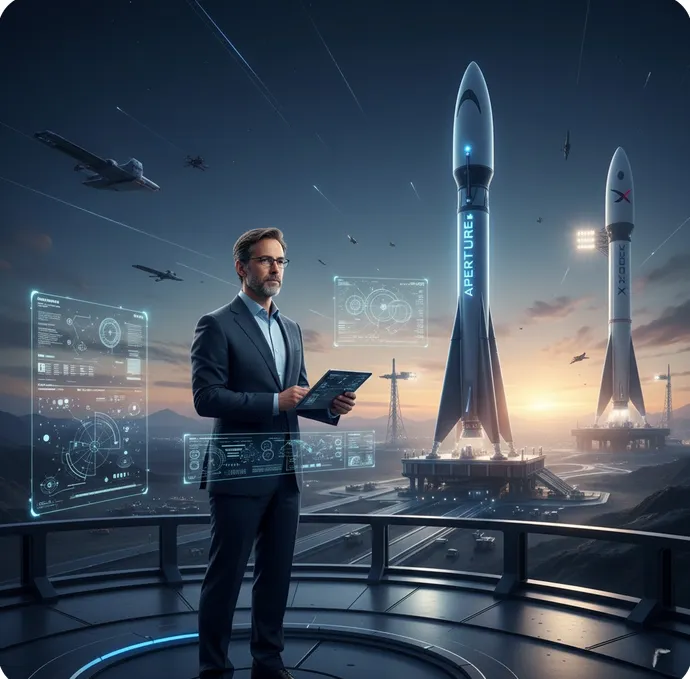
However, moving into space is not just about servers. Altman has also explored building or acquiring a rocket company, which would give him the ability to launch satellites, deploy orbital infrastructure, and eventually create a vertically integrated system that combines space hardware with AI-driven operations.
Exploring Deals With Rocket Companies
According to industry insiders, Altman has already made initial moves to bring this vision closer to reality. In the summer of 2025, he reportedly reached out to Stoke Space, a startup specializing in reusable rockets. Discussions between Altman and Stoke intensified in the fall, with proposals ranging from equity investments to the possibility of OpenAI taking a controlling stake in the company.
While the specifics are still under wraps, the potential investment could have totaled billions of dollars over time, representing a long-term strategic bet on the convergence of AI and space technology. Although the discussions have since cooled, they underscore Altman’s willingness to explore high-risk, high-reward ventures beyond his core AI business.
Market Pressures and OpenAI’s Strategic Shifts
Altman’s explorations into space come at a time when OpenAI itself is facing significant market pressures. The company has entered into hundreds of billions of dollars in computing agreements to support its AI ambitions, but questions remain about how it will fund this massive infrastructure build-out.
This financial pressure coincides with competitive challenges. Google’s Gemini chatbot has begun to chip away at ChatGPT’s market share, prompting OpenAI to declare a “code red” initiative aimed at strengthening its flagship AI. As part of this effort, product rollouts—including advertising services—have been delayed, and teams have been temporarily redirected to focus solely on improving ChatGPT.
Altman’s interest in space-based infrastructure may also be partially motivated by a desire to hedge against terrestrial limitations. Data centers on Earth require enormous amounts of energy, cooling, and physical space. Moving some of this capacity into orbit could alleviate environmental impacts and provide a virtually limitless canvas for computational growth.
Why Space Matters for AI
The concept of orbital data centers is not science fiction—it’s an increasingly realistic proposition. Modern AI models demand tremendous computational power, with each training run consuming as much energy as entire cities. The environmental consequences are becoming harder to ignore.
By situating data centers in space, companies could:
- Harness solar energy directly, reducing reliance on Earth-based power grids.
- Cool servers naturally, as the vacuum of space offers passive cooling options that are difficult to replicate on Earth.
- Enable large-scale AI computations without increasing carbon footprints.
Altman has highlighted these advantages in public statements, emphasizing that the future of AI might not be sustainable without radical infrastructure innovation.
The Competitive Landscape: How SpaceX Fits In
Of course, any move into rocket manufacturing and orbital infrastructure puts Altman in direct competition with SpaceX, the trailblazing company founded by Elon Musk. SpaceX has already revolutionized access to space with reusable rockets, satellite constellations (Starlink), and ongoing missions to support NASA and private customers.
While Musk’s SpaceX focuses on a combination of commercial satellite launches, lunar exploration, and Martian ambitions, Altman’s potential entry could carve out a distinct niche by linking rocket operations directly to AI infrastructure. Essentially, he is exploring a model where the launch vehicle and orbital data systems are integrated, allowing AI companies to scale far beyond what terrestrial data centers can achieve.
The Vision: Rockets, Satellites, and AI in Orbit
Altman’s hypothetical plan is bold. Imagine a world where:
- AI data centers orbit the planet, powered by solar arrays and cooled naturally by space.
- Reusable rockets launch satellites and infrastructure modules, ensuring continuous upgrades and maintenance.
- AI systems control both computation and logistics, optimizing energy usage and satellite operations in real time.
This is not just a business strategy—it’s a long-term vision for humanity’s technological ecosystem. By combining AI and space, Altman could create platforms capable of supporting advanced research, autonomous space operations, and high-performance AI without environmental constraints.
Challenges and Considerations
Of course, the road to orbit is far from simple. Several challenges remain:
- Enormous Capital Requirements: Building rockets, orbital modules, and solar-powered data centers requires billions of dollars in upfront investment.
- Regulatory Hurdles: Space is highly regulated, with licensing, frequency allocation, and international treaties complicating orbital projects.
- Technical Complexity: Launching and maintaining servers in orbit introduces challenges in robotics, materials, and remote operations.
- Competition: Besides SpaceX, companies like Blue Origin, Rocket Lab, and Relativity Space are advancing rapidly, making it a crowded field.
Even with these obstacles, Altman’s entrepreneurial track record and network in Silicon Valley suggest he is well-positioned to navigate the technical and financial challenges.
What This Could Mean for the Future
If Altman succeeds, the implications are staggering. Combining orbital infrastructure with AI could lead to:
- Faster AI development cycles, as unlimited computing resources become accessible.
- Sustainable computation, reducing the environmental footprint of AI operations.
- New commercial and scientific opportunities, from climate modeling to deep-space research.
- Integration of AI and space exploration, enabling autonomous satellites, research stations, and perhaps even interplanetary AI systems.
Altman’s move could also inspire a new class of tech entrepreneurs to consider space as the next frontier for AI and computing, potentially creating a market that spans multiple industries simultaneously.
The Takeaway
While the talks with Stoke Space are no longer active, they reveal the breadth of Altman’s ambitions. He is not content with transforming AI alone; he sees infrastructure, energy, and space as critical components of the future ecosystem.
In many ways, Altman is approaching the challenge from a holistic perspective, combining the computational power of AI with the limitless possibilities of orbital technology. Even if the immediate rocket ventures do not materialize, his interest signals a profound shift in how AI leaders think about scale, sustainability, and the physical limits of technology.
Conclusion
Sam Altman’s foray into space underscores a broader trend: the blurring of lines between AI, infrastructure, and aerospace. By exploring rocket investments and orbital data centers, Altman is positioning himself at the intersection of the two most futuristic industries of the 21st century.
Whether he ends up as a direct competitor to SpaceX or carves out a complementary niche, his vision pushes the boundaries of what AI can achieve. The concept of AI-powered orbital infrastructure could redefine computing, energy usage, and space exploration for decades to come.
In the years ahead, the question is no longer just who will dominate AI on Earth, but who will control the infrastructure that powers AI in space—and Altman seems determined to be a player in both arenas.