In the fast-changing world of semiconductors, competition is measured not only in the number of chips produced but also in the depth of investment in research, manufacturing, and innovation. As global tensions continue to reshape supply chains and as demand for advanced electronics grows at an unprecedented pace, chipmakers worldwide are racing to secure financing that will allow them to scale up capacity and lead the next generation of technological breakthroughs.
In December 2025, STMicroelectronics—one of Europe’s largest and most strategically important semiconductor manufacturers—announced a major financial milestone: a new €1 billion credit line from the European Investment Bank (EIB). Though the news made headlines primarily for the size of the funding, the broader implications stretch far beyond corporate finance. The deal reflects Europe’s rising urgency to strengthen its semiconductor ecosystem, support domestic innovation, and reduce dependency on foreign chipmakers.
This long-form analysis explores what the financing means for STMicroelectronics, how it fits into Europe’s larger technological agenda, and why this partnership marks a significant turning point in the global competition for semiconductor dominance.
A Strategic Move in a Critical Moment
Semiconductors have become the backbone of modern digital life. They power:
- Smartphones and consumer electronics
- Autonomous vehicles and electric cars
- Industrial robotics and automation systems
- Artificial intelligence infrastructure
- Renewable energy technologies
- Medical devices
- Defense communication systems
Yet, the global pandemic and subsequent geopolitical strains revealed a frightening vulnerability: the world relies heavily on a small number of chip-producing regions—primarily Taiwan, South Korea, and the United States. Europe, despite being a leader in automotive electronics and power semiconductors, recognized its growing reliance on external suppliers.
This is where the STMicroelectronics financing deal fits in.
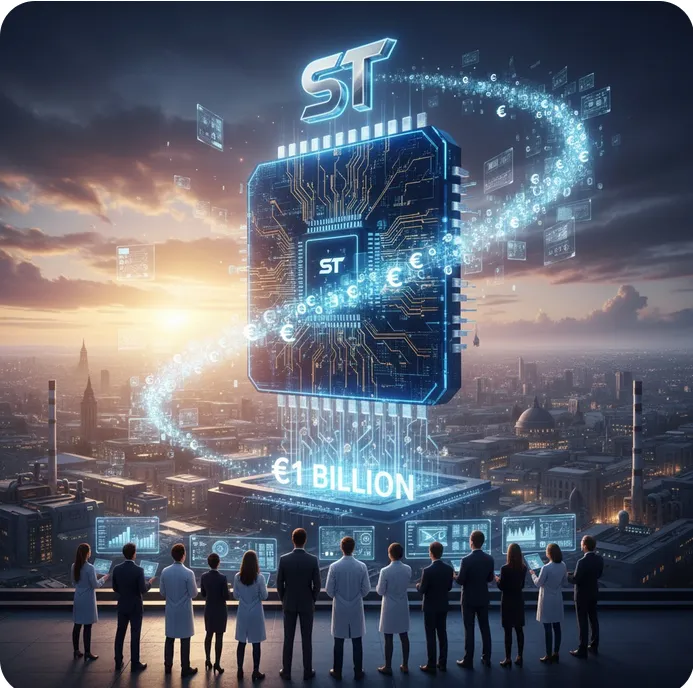
By securing a €1 billion credit line, with an initial €500 million tranche ready for immediate deployment into research and high-volume chip manufacturing, the company is positioning itself at the heart of Europe’s semiconductor transformation.
Inside the €1 Billion Credit Line: How the Funds Will Be Used
While the headline number is impressive, the real story lies in the allocation of the funds.
STMicroelectronics stated that the credit line will support:
1. High-Volume Manufacturing Capacity in Europe (≈ 60% of the funds)
This includes advanced production activities at three of its major European facilities:
- Catania, Italy
- Agrate, Italy
- Crolles, France
These sites play crucial roles in producing:
- Power semiconductors
- Silicon carbide (SiC) chips
- Microcontrollers
- Sensors
- Next-generation logic components
Silicon carbide, in particular, is a rapidly expanding market driven by electric vehicles, renewable energy grids, and industrial automation. By focusing on manufacturing scale-up, STMicroelectronics aims to strengthen Europe’s position in a technology that will define the energy transition.
2. Research and Development (≈ 40% of the funds)
R&D is the lifeblood of chip innovation. The financing supports:
- Materials research
- Chip design
- Next-generation wafer technologies
- Energy-efficient semiconductor processes
- AI-driven manufacturing systems
This dual investment—into both manufacturing and research—demonstrates a balanced focus on immediate capacity and long-term innovation.
A Longstanding Partnership: The Ninth EIB Financing Agreement Since 1994
This latest deal marks the ninth financing agreement between the European Investment Bank and STMicroelectronics since the mid-1990s. Over 31 years, the two organizations have collaborated on approximately €4.2 billion worth of financing agreements.
This enduring partnership highlights several important themes:
1. Europe Considers Semiconductors a Strategic Industry
Unlike consumer markets where products come and go, semiconductor production is a foundational component of national economic resilience. By repeatedly financing STMicroelectronics, the EIB is signaling that Europe views chip manufacturing as a long-term strategic priority.
2. Public–Private Cooperation Is Essential
Building state-of-the-art chip facilities can cost tens of billions of euros. No company, including giants like Intel or TSMC, can undertake such investments without support or incentives. Europe’s approach acknowledges this reality.
3. The Funding Reflects Growing Urgency
While prior deals helped modernize facilities and fund R&D, today’s environment is different:
- Competition is fiercer
- Global shortages have exposed vulnerabilities
- The geopolitical landscape is shifting
This new credit line is part of a broader European push to accelerate manufacturing capabilities now—not ten years from now.
Why This Deal Matters for Europe’s Semiconductor Future
Europe has made ambitious commitments to rebuild its semiconductor strength, including the European Chips Act, a multibillion-euro initiative aimed at doubling the continent’s share of global chip production.
The STMicroelectronics financing plays a crucial role in this effort for several reasons:
1. Strengthening Domestic Manufacturing
European industries—including automotive, energy, medical, and aerospace—depend on a steady supply of advanced chips. Boosting local production reduces reliance on overseas suppliers and helps stabilize supply chains.
2. Supporting the Transition to Green Energy
Silicon carbide chips are central to the electrification movement:
- EV inverters
- High-efficiency charging stations
- Solar inverters
- Industrial power systems
By expanding SiC production, STMicroelectronics directly contributes to Europe’s green transition goals.
3. Enhancing Competitiveness Against U.S. and Asian Giants
The semiconductor industry is dominated by a few large players. Europe must match the pace of global innovation if it wants to maintain leadership in strategic markets like automotive electronics. This financing helps close the gap.
4. Driving Employment and Skill Development
Chip manufacturing facilities require:
- Engineers
- Technicians
- Materials scientists
- Designers
- Advanced manufacturing specialists
Strengthening STMicroelectronics’ European footprint supports long-term job creation and upskilling.
The Broader Context: Global Semiconductor Race Intensifies
The financing deal does not exist in a vacuum. The global semiconductor landscape is more complex than ever:
- The United States passed the CHIPS and Science Act, injecting billions into domestic semiconductor production.
- China continues building fabrication capacity despite facing export restrictions.
- Taiwan and South Korea remain leaders in cutting-edge chipmaking.
- Japan is reviving its semiconductor industry through alliances and subsidies.
Europe cannot afford to sit on the sidelines, and STMicroelectronics is one of the few European players with the scale and expertise to compete globally.
STMicroelectronics: A Crucial Pillar of Europe’s Tech Ecosystem
STMicroelectronics is often overshadowed by louder companies in Silicon Valley or Asia, but its role in Europe’s tech ecosystem is profound.
A Franco-Italian Powerhouse
The company operates under a unique binational structure, with roots in both France and Italy. This structure allows it to access a diverse talent pool, research institutions, and industrial infrastructure.
Leader in Power Semiconductors
ST’s expertise in power electronics makes it indispensable to the automotive sector. Most major carmakers use ST chips in some capacity.
A Critical Supplier in Emerging Technologies
STMicroelectronics contributes essential components for:
- IoT sensors
- Robotics
- Smart appliances
- Aerospace technologies
- Industrial automation
The new financing helps the company expand in precisely these areas.
Why the European Investment Bank Continues to Support STMicroelectronics
The EIB has been a consistent partner for three decades because STMicroelectronics fulfills several key criteria:
1. Strategic Importance
The company’s technologies influence entire industries.
2. Proven Track Record
ST has a long history of delivering high-quality, high-volume production.
3. Innovation Leadership
Its research capabilities are central to Europe’s competitiveness.
4. Economic Impact
Local economies benefit from employment, training, and long-term industrial investment.
Expanding Manufacturing Capacity: A Look at the Key Sites
Catania, Italy
A global hub for silicon carbide production. This facility is crucial for energy-efficient chips used in electric vehicles and industrial systems.
Agrate, Italy
Home to advanced wafer technologies and high-volume manufacturing for a range of microelectronics.
Crolles, France
A major technology center focused on process development, logic chips, and large-scale semiconductor fabrication.
Investing in these facilities boosts Europe’s ability to produce high-demand chips at scale.
The R&D Boost: Fueling the Future of Chip Innovation
Europe cannot rely on manufacturing alone—innovation is just as important.
The 40% R&D allocation supports:
- Advanced materials research
- New semiconductor architectures
- Miniaturization technologies
- AI-enhanced production
- Energy-efficient designs
This funding keeps Europe in the global innovation race.
Financial Stability in an Uncertain Market
The semiconductor industry is cyclical. Demand can surge, then crash, often swinging wildly based on:
- Consumer device trends
- Automotive production
- Global supply shocks
- Technological shifts
Access to long-term financing helps companies remain stable and innovative during downturns while scaling during periods of strong demand.
Why This Financing Matters for Consumers and Industries
The impact of this deal goes far beyond STMicroelectronics’ internal operations.
For consumers
- More reliable availability of electronic products
- Faster innovation in EVs, smartphones, and household devices
- Less vulnerability to global shortages
For businesses
- Stable chip supply for automakers, appliance manufacturers, and industrial firms
- Lower production delays
- Increased investment confidence
Looking Ahead: What This Means for Europe Over the Next Decade
The €1 billion credit line is not just another financial deal—it is a signal that Europe is prepared to invest deeply in semiconductor sovereignty.
Over the next decade, this funding will help:
- Expand domestic chip supplies
- Strengthen Europe’s energy transition
- Boost its competitiveness
- Support tens of thousands of jobs
- Secure a foothold in future technologies
STMicroelectronics stands at the center of this movement.
Conclusion: A Billion-Euro Step Toward a Stronger Tech Future
The new financing agreement between STMicroelectronics and the European Investment Bank marks a crucial moment for Europe’s semiconductor ambitions. With a balanced focus on R&D and high-volume manufacturing, the credit line strengthens both the company and the continent’s technological independence.
As global competition intensifies, Europe is signaling that it intends not only to participate in the semiconductor race—but to lead in key areas. This partnership is a powerful step in that direction, promising innovation, resilience, and industrial strength for years to come.