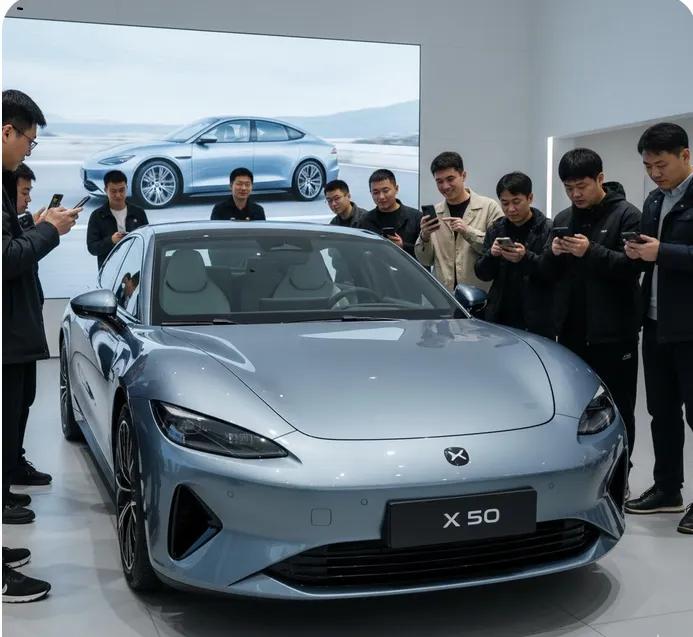
It’s a milestone moment for Xiaomi, the tech giant more commonly associated with smartphones, laptops, and smart home devices: the company has officially launched its first electric vehicle (EV), the Xiaomi SU7. Just days after the debut, however, eager buyers have been greeted with an unexpected twist—they may have to wait up to six months to take delivery of their new EV.
The news has sent ripples through the automotive and tech communities, highlighting both the excitement surrounding Xiaomi’s EV ambitions and the growing pains of a company transitioning from electronics to high-volume car manufacturing.
The SU7 and SU7 Max: Specs and Pricing
Xiaomi’s EV lineup is led by two variants: the standard SU7 and the more premium SU7 Max. In China, the standard SU7 is priced at 215,900 yuan (roughly $29,870 or £23,660), while the Max version comes in at 299,900 yuan. For context, Tesla’s Model 3—a direct competitor in the mid-sized EV segment—starts at 245,900 yuan, putting Xiaomi’s offering in a highly competitive price bracket.
But Xiaomi isn’t just trying to compete on cost. The SU7 has drawn attention for its impressive range: up to 700 kilometers (435 miles) on a single charge for the Max variant. That figure surpasses the 567 km range of the Tesla Model 3 and positions the SU7 as a serious contender for buyers who prioritize long-distance driving without frequent recharging.
The design of the SU7 has also garnered attention, with industry observers drawing comparisons to high-end German sports sedans like the Porsche Taycan and Panamera. Sleek lines, sporty proportions, and a futuristic cabin suggest Xiaomi wants to make a strong first impression in a market dominated by legacy automakers.
Record Pre-Orders and Long Delivery Times
The excitement around the SU7 is evident in its early sales figures. Within just 24 hours of opening pre-orders, Xiaomi reportedly received 88,898 orders, signaling robust demand for the company’s first EV.
However, the strong demand has come with a logistical challenge: buyers have been informed that deliveries could take up to 27 weeks—roughly six months. Screenshots circulating on Chinese social media show official communication from Xiaomi warning prospective owners of the extended wait times, especially for the SU7 Max.
For consumers used to near-instant gratification in the tech world, six months is a long time to wait. But for many, the promise of a fully integrated, high-range EV with Xiaomi’s unique ecosystem might be worth the patience.
Marketing the Xiaomi Way
Xiaomi has taken an unusual approach to marketing its EVs, blending traditional automotive promotion with the company’s consumer electronics expertise. One notable strategy is the Founder's Edition, a limited version of the SU7 that comes with perks such as complimentary smart home appliances, including refrigerators.
The idea seems simple: leverage Xiaomi’s existing consumer base. Many Xiaomi smartphone users, for instance, already rely on the company’s Mi Home ecosystem. By creating an EV that shares software and user experience similarities with its phones and laptops, Xiaomi is aiming to make ownership feel familiar, convenient, and tightly integrated.
The company’s CEO, Lei Jun, confirmed via social media that a second round of sales for the Founder's Edition would open soon, indicating that the first batch sold out quickly. This approach not only rewards early adopters but also builds hype, creating a sense of scarcity and exclusivity around Xiaomi’s first car.
Production Partnerships and Capacity
Xiaomi isn’t building the SU7 entirely on its own. Its EVs are manufactured in partnership with BAIC Group, a state-owned automaker in China. The plant in Beijing has the capacity to produce up to 200,000 vehicles per year, which should theoretically accommodate Xiaomi’s early demand—if not the sudden surge in pre-orders.
Partnering with an established manufacturer allows Xiaomi to sidestep some of the initial hurdles that new automakers face, such as developing a production line from scratch. But it doesn’t remove challenges entirely. Building EVs at scale requires consistent quality, efficient supply chains, and the ability to adapt quickly to changing market conditions.
Navigating a Tough EV Market
Xiaomi is entering the EV sector at a complex and highly competitive time. Globally, growth in electric vehicle sales has slowed, and the Chinese market—the largest in the world—is experiencing a price war among manufacturers.
Tesla, led by Elon Musk, has cut prices in China by thousands of dollars in recent months. Local rival BYD, the world’s top-selling EV company, has slashed prices aggressively while still posting record annual profits. Other domestic EV makers like Nio have had to revise delivery forecasts downward, citing cautious consumer spending amid slowing economic growth.
This environment creates both opportunities and risks for Xiaomi. On one hand, consumers are price-conscious and hungry for alternatives to Tesla. On the other, a crowded market makes it challenging to stand out, especially for a company primarily known for electronics rather than automobiles.
The Apple Parallel
Xiaomi’s venture also draws inevitable comparisons to Apple, another tech giant rumored to have pursued an EV project. Reports emerged recently that Apple had paused or canceled its electric car plans, illustrating the significant technical, financial, and operational hurdles technology companies face when attempting to enter the automotive sector.
Unlike Apple, Xiaomi has taken a partnership approach with BAIC Group and is leveraging existing manufacturing capabilities in China. But it’s still navigating a steep learning curve: EV production requires long-term planning, supply chain resilience, and software development capabilities that are far beyond those needed for phones or laptops.
Long-Term Investment and Strategy
Despite the challenges, Xiaomi is making a significant commitment to its EV business. The company has announced plans to invest $10 billion over the next decade in developing its automotive division. That level of investment signals that Xiaomi isn’t treating this as a side project; it sees EVs as a central pillar of its long-term growth strategy.
Key elements of this strategy include:
- Integration with Xiaomi’s device ecosystem: By sharing operating systems and software interfaces across phones, laptops, and vehicles, Xiaomi hopes to create a seamless digital lifestyle for consumers.
- High-range EVs at competitive prices: The SU7 and SU7 Max aim to combine long-range capabilities with affordability, targeting buyers who want more than just a short-range city car.
- Limited editions and perks: Exclusive versions of the car, along with free gifts, are designed to generate buzz and reward early adopters.
This approach underscores Xiaomi’s philosophy: blend technology, design, and ecosystem synergy to differentiate in a crowded market.
Comparing Xiaomi SU7 to the Competition
It’s helpful to look at Xiaomi’s offering in context with its competitors:
ModelPrice (China)RangeNotesXiaomi SU7215,900 yuan700 kmShares ecosystem with Xiaomi devicesXiaomi SU7 Max299,900 yuan700 kmPremium trim with extra featuresTesla Model 3245,900 yuan567 kmEstablished EV with supercharger networkPorsche TaycanHigher400–450 kmLuxury sports EVBYD HanVaries605–605 kmDomestic competitor with strong sales
From this perspective, Xiaomi is clearly aiming at the intersection of long-range practicality and premium design, all while remaining more affordable than some foreign EV options. The strategy may resonate with tech-savvy consumers who are already embedded in Xiaomi’s ecosystem.
Challenges Ahead
While the SU7 launch has generated excitement, Xiaomi faces several hurdles:
- Production bottlenecks: Six-month delivery estimates suggest the company may struggle to scale quickly enough to meet demand.
- Competitive pricing pressure: Tesla, BYD, and other domestic manufacturers continue to adjust prices aggressively, which could limit Xiaomi’s ability to command a premium.
- Consumer trust in automotive quality: Unlike smartphones, cars require long-term reliability, safety certification, and robust after-sales service. Xiaomi will need to demonstrate competence beyond hype and design.
- Economic headwinds: Slower growth in China’s economy and cautious consumer spending could affect demand for premium EVs, even with strong brand recognition.
Why Xiaomi’s Entry Matters
Despite these challenges, Xiaomi’s entry into the EV market is significant for several reasons:
- It validates the EV segment’s growth potential. Even as global EV growth slows, major tech firms are willing to invest heavily, signaling long-term confidence.
- It introduces new competition. Tesla and BYD have dominated China’s EV scene. Xiaomi’s ecosystem-focused approach may attract a younger, tech-savvy audience who value device integration as much as driving performance.
- It shows cross-industry convergence. Smartphones, laptops, smart home devices, and vehicles are increasingly interconnected. Xiaomi is betting on consumers preferring an integrated experience over standalone products.
In many ways, Xiaomi’s strategy echoes Apple’s approach to hardware: sell devices that work seamlessly together, create excitement through design, and reward early adopters with exclusivity. But unlike Apple, Xiaomi is taking the risk in a price-sensitive, highly competitive market.
Looking Ahead
The SU7’s launch represents just the beginning of Xiaomi’s journey in the automotive sector. The company has ambitious plans to expand its lineup, improve manufacturing capacity, and invest heavily in EV software, including autonomous driving features and intelligent vehicle management systems.
If Xiaomi can successfully deliver its vehicles at scale, maintain quality standards, and continue innovating in both software and design, the company could emerge as a serious player not only in China but eventually in global EV markets.
However, the road will not be easy. The EV market is evolving rapidly, competitors are aggressive, and consumer expectations are high. Xiaomi’s six-month delivery timeline is a microcosm of these challenges: demand is strong, but supply chains and production capabilities must catch up.
Final Thoughts
The launch of the Xiaomi SU7 is more than just the debut of a new EV; it’s a bold statement that one of the world’s largest technology companies intends to reshape mobility. Early signs are promising—record pre-orders, impressive range, competitive pricing, and a clever integration with Xiaomi’s existing ecosystem.
At the same time, the extended wait times, competitive pressures, and operational hurdles illustrate just how difficult it is for even the most successful tech firms to break into the automotive world. Xiaomi’s journey with the SU7 will be watched closely by investors, industry analysts, and tech enthusiasts alike.
For consumers, the SU7 offers a tantalizing proposition: a long-range, tech-rich, stylish EV backed by a brand they may already trust. But it also asks for patience, as the company ramps up production to meet unprecedented demand.
In short, Xiaomi has made a splash with its first EV. Whether it can turn that splash into a lasting wave remains to be seen—but one thing is certain: the era of tech giants entering the electric vehicle market is officially here.