For years, the dominant narrative in the tech world has revolved around a relentless push toward the cloud. Massive enterprises, governments, startups, and institutions have all been nudged—sometimes gently, sometimes aggressively—toward cloud-first strategies. Companies that once owned sprawling data centers filled with their own machines were encouraged to offload as much as possible to hyperscalers like Amazon Web Services, Microsoft Azure, and Google Cloud.
But in late 2025, that story took an interesting turn. Amazon announced a major new offering called “AI Factories,” a product that flips much of the old cloud-first ideology on its head. This move is not just a new SKU on the AWS menu—it reflects a deeper shift happening across the global tech ecosystem, driven by concerns over data sovereignty, the rising costs of training advanced AI systems, and an ever-growing demand for privatized, secure, and high-performance AI infrastructure.
In essence, the AI era is reshaping the cloud itself.
And Amazon, clearly not content to let rivals dominate this category, has chosen to partner with Nvidia—arguably the most influential AI hardware provider on the planet—to build these on-prem systems. AWS will bring its own silicon, networking stack, management software, and cloud integration options, while Nvidia provides the AI horsepower that has become synonymous with the state of the art.
This blog post dives deep into what Amazon’s “AI Factory” actually is, why it matters, how it compares with what Microsoft and other players are doing, and what this means for the future of enterprise and government computing. We’ll also explore why the cloud’s biggest champions are suddenly marching back toward private data centers—almost like the clock has rolled back to the late 2000s.
The Return of On-Prem AI: What Amazon Is Really Announcing
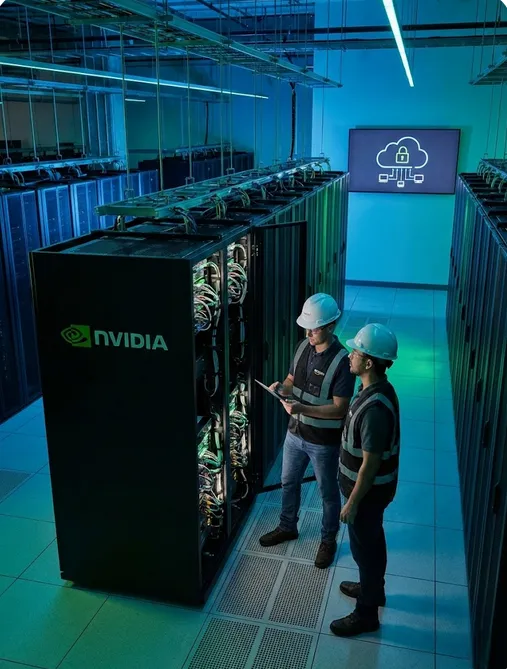
Amazon’s AI Factory offering is essentially a way for large organizations—especially those operating under strict regulatory or national-security restrictions—to run enterprise-grade AI infrastructure inside their own buildings, on their own land, plugged into their own power sources, surrounded by their own physical security.
Think of it as a “cloud-in-a-box,” but for high-performance AI rather than general computing.
Here’s what Amazon is promising:
- Customers provide the physical facility, security, and power.
- AWS installs, manages, and updates the AI system inside that facility.
- AWS maintains operational responsibility but does not “take possession” of the customer’s data.
- The system can optionally connect back to the AWS cloud, enabling hybrid workflows.
- Customers can choose between Nvidia’s cutting-edge GPUs or Amazon’s own AI chips.
- The entire setup is designed to meet strict data sovereignty requirements.
Essentially, organizations get all the advantages of Amazon’s AI ecosystem—but without sending sensitive data to someone else’s cloud.
For many government agencies, defense organizations, major banks, and critical infrastructure players, that’s a game changer.
Why Data Sovereignty Has Become a Dealbreaker
For the last decade, cloud adoption was almost considered inevitable. Companies that lagged behind were criticized as dinosaurs or risk-averse bureaucracies who just couldn’t “get with the times.”
But AI shifted the conversation dramatically.
AI systems thrive on data—especially private, proprietary, or sensitive data. Training, fine-tuning, refinement, continuous learning, inference pipelines, and governance all revolve around access to large volumes of information that enterprises treat as their crown jewels.
And suddenly, handing that data to a third-party cloud provider doesn’t feel as comfortable as it used to.
The reasons vary:
- National security concerns: Governments don’t want sensitive intelligence or citizen data processed in foreign-operated facilities.
- Corporate trade secrets: Companies are terrified of exposing proprietary datasets to model makers.
- Regulation: New privacy, AI governance, and digital sovereignty laws require data to remain physically within certain borders—or within approved environments.
- Supply chain control: Organizations want full visibility into the hardware and infrastructure running their AI systems.
- Dependency concerns: Some companies fear becoming too reliant on hyperscalers for their core AI capabilities.
Amazon’s AI Factory offering seems designed specifically to address these concerns. It reassures customers that:
“Your data stays on your turf. We bring the hardware and the expertise. You keep the sovereignty and the control.”
This is not a small shift—it’s part of a massive geopolitical and technological trend. Almost every major country is building digital sovereignty strategies, and almost every hyperscaler is being forced to adapt.
The Nvidia Twist: Amazon Uses Nvidia’s Term for Its Own Product
There’s a particularly intriguing twist in Amazon’s announcement: the use of the term “AI Factory.”
Nvidia has used this phrase for years to describe its massive, GPU-packed, end-to-end AI infrastructure. In fact, Nvidia often describes its systems as the equivalent of “AI generation plants”—industrial-grade facilities for mass-producing AI capabilities.
So when AWS chose to call its on-prem system an “AI Factory,” many observers immediately noted the overlap.
And that’s when the companies confirmed it: this is a collaboration.
AWS’s version of the AI Factory is a hybrid design that blends:
- Nvidia’s latest-generation Blackwell GPUs, the chips powering some of the world’s most advanced AI workloads.
- Amazon’s Trainium3 chips, AWS’s newest custom silicon aimed at lowering AI training costs.
- AWS’s software ecosystem, including Bedrock for model hosting and SageMaker for training.
- Amazon’s networking, storage, and security stack, optimized for large-scale AI workloads.
This partnership matters because it signals something important:
Nvidia isn’t choosing sides.
It’s selling its AI Factory architecture to everyone—Amazon, Microsoft, Google, Oracle, governments, and private enterprises.
That means the real competition won’t be about hardware—it will be about how cloud providers package, integrate, and operate their AI factory offerings.
Amazon’s response? Bring the cloud to the customer.
Microsoft Already Showed Its Hand—and Its Plan Looks Different
To understand why Amazon is moving so aggressively, it helps to look at what Microsoft has been doing.
Microsoft started installing Nvidia-powered AI Factories months earlier—mostly to support OpenAI’s massive compute demands. These systems are being deployed globally inside Microsoft data centers, and Microsoft calls some of its next-generation builds “AI Superfactories.”
Two facts stand out:
- Microsoft is deeply integrating Nvidia’s full AI Factory architecture into Azure’s backbone.
- Microsoft has not (at least publicly) offered those same systems as an on-prem turnkey product—yet.
Instead, Microsoft has launched several sovereignty-focused solutions:
- Azure Local (hardware installed on customer premises)
- Country-specific data centers bound by local laws
- National cloud strategies partnered with governments
While similar in intent, Microsoft’s approach frames the cloud operator (Azure) as the one building sovereign environments, rather than putting Azure-controlled AI systems inside corporate data centers.
Amazon appears to be taking a more direct “we’ll put the factory in your building” approach.
The competition is heating up—and the philosophical differences are stark.
Why Are Cloud Providers Re-Embracing Private Data Centers?
In 2009, the industry was obsessed with “private cloud.”
In 2025, the industry is circling right back to the same idea—but with a very modern twist.
At first glance, it might seem ironic. Cloud providers spent years convincing companies to shut down their data centers. Now they’re selling AI appliances meant to live in those very same buildings.
But when you dig deeper, the comeback of on-prem AI infrastructure makes perfect sense.
1. AI hardware is too expensive for most customers to manage alone.
Top-tier GPU clusters cost tens of millions—or even hundreds of millions—of dollars.
No enterprise wants to manage all that complexity alone. Cloud-style OPEX pricing is a huge selling point—but sovereignty demands the hardware stay local.
2. Governments require strict guarantees cloud regions can’t always provide.
Countries want absolute control over:
- Physical location
- Security clearance of technicians
- Network isolation
- Chain-of-custody for data
- Hardware provenance
An on-prem AI Factory solves these issues more cleanly than building dozens of sovereign cloud regions.
3. Cloud providers don’t want to lose the AI race.
If hyperscalers say “we can’t help you unless you upload your data to our cloud,” customers will look elsewhere—perhaps to competitors designing private or sovereign AI clusters.
4. Hybrid cloud is becoming the real default.
The future isn’t cloud vs. data center, but cloud AND data center working as one system.
Amazon’s AI Factory is exactly that: a hybrid AI environment.
How Amazon’s AI Factory Could Transform Enterprise AI
What Amazon is really selling isn’t hardware. It’s a way to accelerate AI deployment without forcing companies into uncomfortable architectural or regulatory compromises.
Here are some potential impacts:
1. Enterprises can train frontier-level models without sacrificing sovereignty.
Data-heavy industries—healthcare, finance, defense, energy—can now build powerful models entirely on-site, with AWS handling the complexity.
2. Amazon strengthens its silicon strategy.
Trainium3 now competes directly with Nvidia’s Blackwell GPUs—inside the same factory.
AWS wants customers to choose its chips for cost-efficiency.
3. AWS becomes harder to replace.
If your AI infrastructure is installed and managed by AWS technicians inside your building, moving away from AWS becomes extremely difficult. It’s a lock-in strategy, but a very clever one.
4. AI regulation becomes easier to comply with.
Local data residency, restricted access, and physical control simplify compliance for industries with heavy oversight.
5. The cloud/edge boundary gets blurrier.
Companies no longer have to choose.
Everything becomes part of one interconnected AI fabric.
Will Google Follow? What About Oracle and Others?
Google has been quieter, but almost certainly will develop its own sovereign AI offering—especially given its strength in TPUs and long history with AI acceleration.
Oracle already sells on-prem cloud appliances, including sovereign and military-grade systems, making it well positioned to join this race quickly.
Hyperscalers do not want to repeat past mistakes like missing the early enterprise cloud wave. AI Factories may be the next big arena for competition.
A Glimpse Into 2026 and Beyond: The New AI Industrial Era
We’re entering a period where AI infrastructure is treated like manufacturing plants, power stations, or logistics hubs—critical national resources that must be controlled, secured, and regulated.
Amazon’s AI Factory offering represents a larger industry trend:
- Data is becoming more valuable.
- AI models are becoming central to economic and national power.
- Sovereignty is becoming non-negotiable.
- Customers are demanding hybrid architectures.
The cloud of the future won’t be a place.
It will be a network of AI factories, some owned by hyperscalers, some by governments, some by corporations, all connected through secure digital pipelines.
Final Thoughts: The Cloud Isn’t Dying—It’s Changing Shape
Amazon’s AI Factory announcement is not a retreat from the cloud—it's an expansion of what “cloud services” can mean. Instead of dragging customers to the cloud, AWS is now bringing parts of the cloud directly to the customer.
This move signals a broader industry transformation:
- AI is redefining infrastructure.
- Data sovereignty is reshaping business strategy.
- Hybrid cloud is becoming the default model.
- Nvidia’s ecosystem is becoming unavoidable.
- Hyperscalers are competing on where AI lives—not just how it runs.
The next wave of innovation won’t be about renting servers by the hour. It will be about building AI production lines—massive, efficient, sovereign, integrated, and secure.
Amazon’s entry into on-prem AI factories marks the start of a new chapter in enterprise computing. And if history is any indication, the rest of the industry will follow quickly.