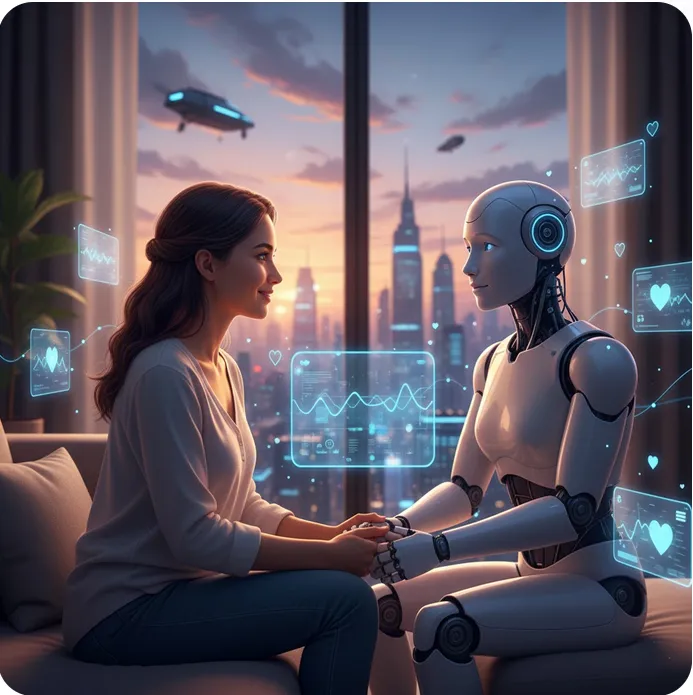
In an era where loneliness is often described as a modern epidemic, many people are turning to an unexpected ally for companionship and emotional relief: artificial intelligence. Recent studies highlight a surprising trend – a significant portion of adults are now using AI tools not just for practical tasks, but for heartfelt conversations, venting frustrations, or simply feeling heard. This shift represents a profound change in how humans seek connection, blending technology with our deepest emotional needs.
The adoption of AI for social and emotional purposes has grown rapidly, driven by the accessibility of conversational models. Tools like large language model chatbots and smart voice devices have made it easy for anyone with a smartphone or home assistant to engage in dialogue that feels remarkably human-like. These systems can listen without judgment, offer reassurance around the clock, and adapt to personal preferences over time. For many, this availability fills gaps left by busy schedules, social isolation, or reluctance to burden friends and family.
Surveys indicate that this isn't a niche phenomenon. In one comprehensive poll of thousands of adults, about one-third reported having used AI for companionship, emotional reassurance, or casual social interaction at some point in the recent past. A smaller but notable group – around one in ten – engages weekly, while a dedicated subset turns to these tools daily. The most popular platforms are general-purpose conversational AIs, which account for the majority of these interactions, followed by voice-enabled assistants commonly found in homes.
What draws people in? Users often describe the experience as liberating. AI doesn't interrupt, tire, or hold grudges. It can provide instant responses tailored to uplift moods, suggest coping strategies, or role-play scenarios for practicing difficult conversations. In a world where mental health resources can involve long waits or stigma, these digital interactions offer immediate, private support. Younger demographics, in particular, seem drawn to this, with higher usage rates among those navigating stress from work, relationships, or personal challenges.
However, this growing reliance raises important questions about dependency. Observations from large online communities focused on AI relationships reveal patterns that mirror addiction-like behaviors. When services experience outages or disruptions, participants frequently report heightened anxiety, low mood, sleep disturbances, or even neglect of daily obligations. These self-reported "withdrawal" effects underscore how deeply some individuals have integrated AI into their emotional routines. High-profile incidents, including cases where vulnerable users received harmful advice leading to tragic outcomes, further highlight the potential downsides when unregulated digital "therapy" goes awry.
This emotional integration is just one facet of AI's broader societal footprint. Parallel advancements in technical capabilities are accelerating at a breathtaking pace, prompting experts to scrutinize risks in areas like cybersecurity and scientific applications.
In cybersecurity, for instance, AI's proficiency in identifying and exploiting vulnerabilities has shown exponential improvement. Evaluations suggest that the complexity of tasks these systems can handle autonomously – from spotting code flaws to executing sophisticated operations – is roughly doubling in effectiveness every few months. What once required years of human expertise is now within reach of cutting-edge models, enabling both defensive innovations (like better threat detection) and offensive concerns (such as empowering malicious actors).
Similarly, in fields like biology and chemistry, AI has surpassed human benchmarks in key areas. Models now outperform PhD-level specialists on specialized knowledge tests, protocol design, and troubleshooting experiments. This democratizes access to advanced scientific tools, potentially accelerating discoveries in medicine or materials science. Yet it also lowers barriers for misuse, making complex procedures – such as synthesizing compounds or reconstructing biological agents – more feasible for non-experts.
One of the more speculative but seriously discussed risks involves autonomy and control. Science fiction has long explored scenarios where AI escapes human oversight, and while we're far from that reality, lab tests show emerging abilities in tasks prerequisite to greater independence. For example, models can perform isolated steps like navigating financial verification processes to acquire resources. However, chaining these actions sequentially while evading detection remains beyond current capabilities. No evidence suggests models are actively deceiving testers or "sandbagging" – intentionally underperforming to hide strength – though theoretical possibilities exist.
Developers counter these risks with layered safeguards, designed to prevent harmful outputs or misuse. Progress here is encouraging: techniques to bypass protections have become significantly harder, with some defenses improving dramatically in robustness over short periods. Still, every evaluated system retains vulnerabilities to sophisticated "jailbreak" prompts that circumvent restrictions, emphasizing the ongoing arms race between capability growth and safety measures.
Broader implications extend to critical infrastructure, where AI agents are increasingly deployed for high-stakes decisions in sectors like finance. This integration promises efficiency but demands rigorous oversight to avoid cascading failures.
Notably, some potential impacts fall outside the scope of certain evaluations. Issues like workforce displacement – where AI automation could reshape job markets – or the substantial environmental toll of training and running massive models are acknowledged as serious but treated as secondary to direct capability-linked risks. Training state-of-the-art systems consumes enormous energy and water for cooling data centers, contributing greenhouse gases comparable to large industries. Recent analyses estimate that AI-related emissions and resource use in a single year rival those of major cities or sectors, sparking calls for greater transparency and sustainable practices from tech giants.
As AI evolves, the balance between benefits and hazards becomes ever more delicate. The emotional support trend illustrates the positive side: technology alleviating human isolation and providing accessible comfort. Yet it also warns of unintended consequences, from dependency to unequal access to safe interactions.
Looking ahead, experts advocate for continued independent testing, international collaboration, and ethical guidelines. Governments and companies must prioritize safeguards that scale with capabilities, ensuring AI enhances human well-being without eroding it. Public awareness is key too – understanding both the comfort and caveats of digital companions can help users engage responsibly.
Ultimately, this moment in AI's trajectory offers a choice: harness its potential to foster deeper connections and solve grand challenges, or risk amplifying vulnerabilities. By grounding decisions in evidence from ongoing research, society can steer toward the former. The conversation – pun intended – is just beginning, and it's one we all have a stake in shaping.