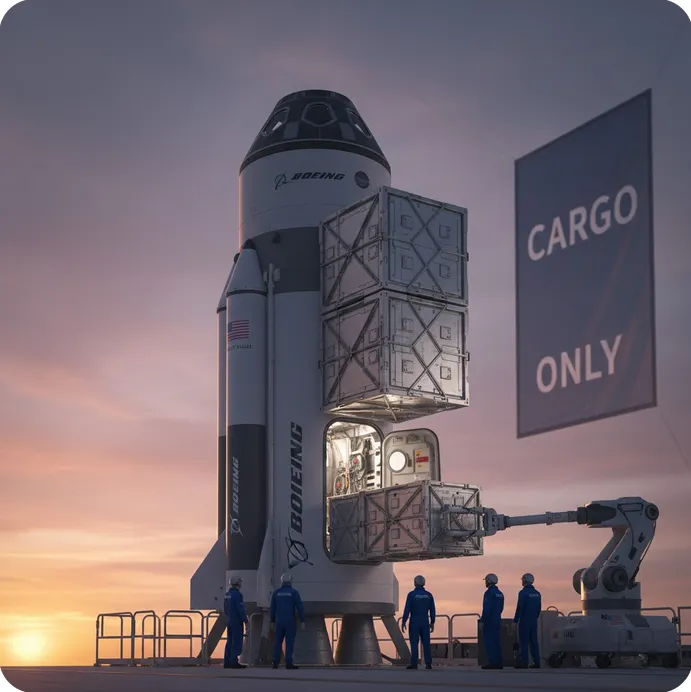
In the evolving landscape of human spaceflight, few programs have faced as much scrutiny and setback as Boeing's CST-100 Starliner. Designed to ferry astronauts to and from the International Space Station (ISS) as part of NASA's Commercial Crew Program, the spacecraft has encountered repeated technical hurdles. As we approach the end of 2025, a significant update has reshaped its near-term future: the next mission, slated for no earlier than April 2026, will carry only cargo—no human passengers.


This decision, announced in late November 2025, follows extensive reviews of propulsion system anomalies that marred the vehicle's first crewed test flight in 2024. It also coincides with modifications to NASA's contract with Boeing, reducing guaranteed operational flights and emphasizing safety validation before resuming crew transport.
The Roots of the Program: Ambition Meets Reality
The Commercial Crew Program, launched in the post-space shuttle era, aimed to restore U.S. independent access to the ISS by partnering with private companies. In 2014, NASA awarded fixed-price contracts to two providers: SpaceX for its Crew Dragon capsule and Boeing for Starliner. The goal was redundancy—two independent systems to ensure reliable crew rotation and avoid sole dependence on Russian Soyuz spacecraft.
Starliner promised a reusable capsule capable of carrying up to seven passengers (or a mix of crew and cargo), landing on solid ground with airbags for quick turnaround. Early milestones included uncrewed test flights, but challenges emerged quickly. A 2019 orbital test failed to reach the ISS due to software glitches, necessitating a repeat in 2022.
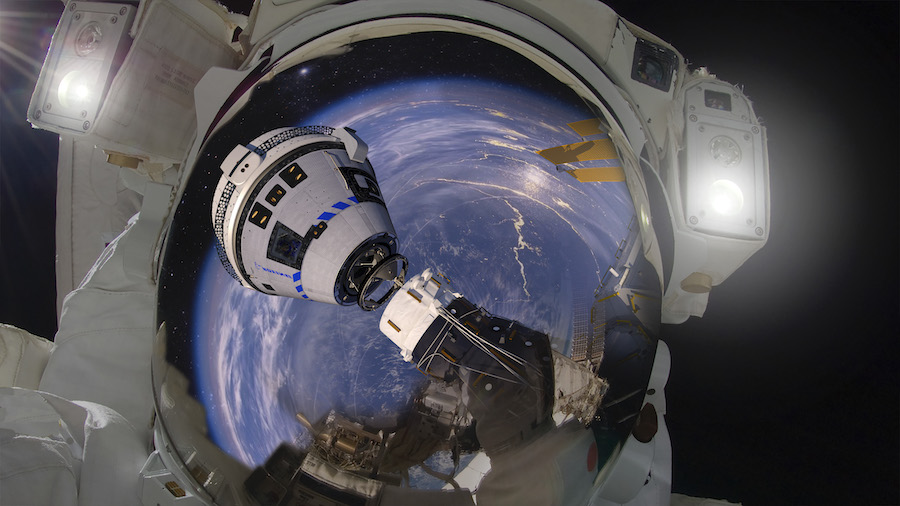
By contrast, SpaceX achieved crewed operations in 2020 and has since completed numerous successful missions. Boeing's delays mounted, with costs ballooning well beyond initial projections.
The 2024 Crewed Flight Test: Triumph Turned to Trouble
The long-awaited Crew Flight Test (CFT) launched in June 2024, carrying veteran NASA astronauts Butch Wilmore and Suni Williams. The ascent was nominal, but issues surfaced en route: multiple helium leaks in the propulsion system and malfunctions in several reaction control thrusters critical for maneuvering and docking.
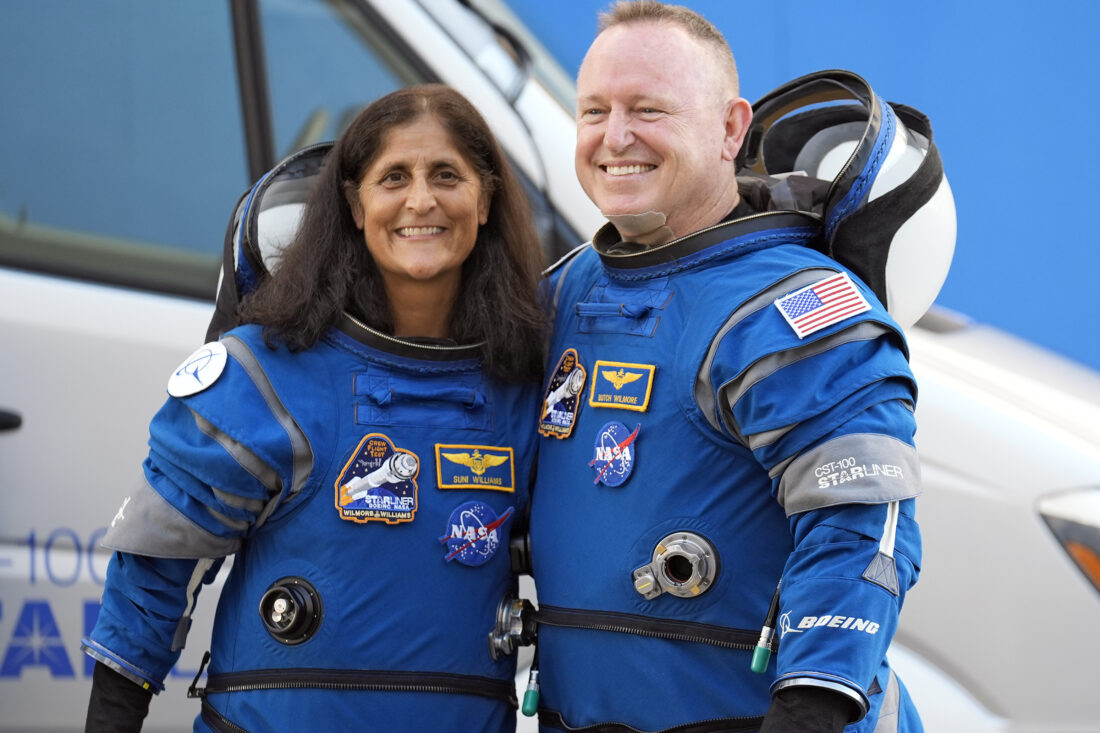
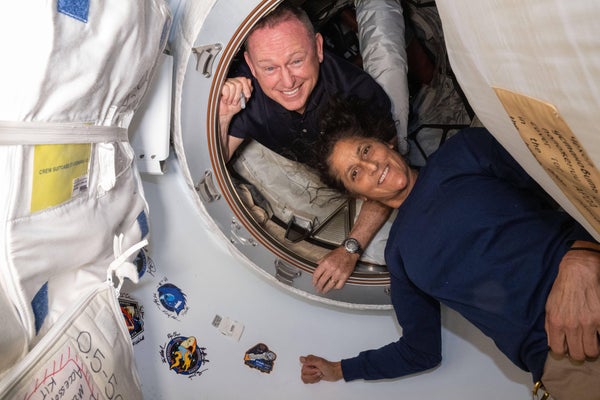

Despite these, the capsule docked successfully. Ground teams analyzed the problems—helium pressurizes the thrusters, and leaks risked depleting reserves needed for deorbiting. Thruster failures, linked to overheating and material degradation, raised concerns about safe undocking and reentry.
After weeks of testing (including hot-fire demonstrations while docked), NASA deemed the risks too high for crew return. In a controversial call, Starliner undocked uncrewed in September 2024, landing safely in New Mexico. Wilmore and Williams remained on the ISS, integrating into ongoing expeditions.


To bring them home, NASA adjusted a subsequent SpaceX Crew Dragon mission, launching with reduced crew to accommodate seats for the pair on return. They finally splashed down in March 2025 after over nine months in orbit—far beyond the planned week-long test.


Post-Mission Investigations and Fixes
The uncrewed return allowed intensive ground testing. Engineers dissected the service module (discarded on reentry) via simulations and duplicate hardware. Key findings pointed to thruster "doghouses"—enclosures where overheating caused poppet valves to stick and seals to degrade.
Helium leaks stemmed from flange seals vulnerable under thermal stress. Boeing implemented redesigns: improved materials, better thermal protection, and software safeguards. Rigorous testing at facilities like White Sands continued through 2025, validating fixes for flight.

Boeing Crew Flight Test Problems Becoming Clearer: All five of the ...
The 2025 Decision: Cargo First, Crew Later
By mid-2025, speculation grew about the next flight—originally post-certification operational with crew. NASA prioritized caution, announcing in November that Starliner-1 would be uncrewed, focused on cargo delivery and in-flight verification of upgrades.
This mission, targeting April 2026 or later, will demonstrate reliable docking, undocking, and reentry without risking lives. Success could pave the way for certification and crewed operations starting with Starliner-2, potentially in late 2026.
Contract adjustments reduced firm commitments from six to four crewed missions (with options for two more), aligning with the ISS's planned retirement around 2030. This reflects realistic timelines and NASA's reliance on SpaceX for most rotations.
Broader Implications for U.S. Spaceflight
The shift underscores the value of redundancy in human spaceflight. While SpaceX has proven dominant, maintaining two providers enhances resilience—protecting against single-point failures.
For Boeing, it's a humbling pivot amid financial pressures and broader company challenges. Yet, commitment remains: ongoing investments aim to resolve issues and contribute to low-Earth orbit access.
Critics question the program's cost-effectiveness, given overruns and delays. Proponents argue perseverance yields long-term benefits, including competition driving innovation.
Looking Ahead: Challenges and Opportunities
As 2025 closes, Starliner's path forward emphasizes methodical progress. The cargo mission will test fixes in real conditions, building data for crew certification.
Beyond ISS, Starliner could support future commercial stations or lunar efforts. But near-term focus is proving reliability.
In human space exploration, safety trumps speed. This cautious approach, while delaying crew flights, prioritizes the ultimate goal: sustainable, secure access to space for generations.
The story of Starliner reminds us that breakthroughs often follow setbacks—and persistence, grounded in rigorous engineering, is key to reaching the stars.